
Our Why
Industry is good at documenting what should happen.
Sysmax exists to verify what was done.
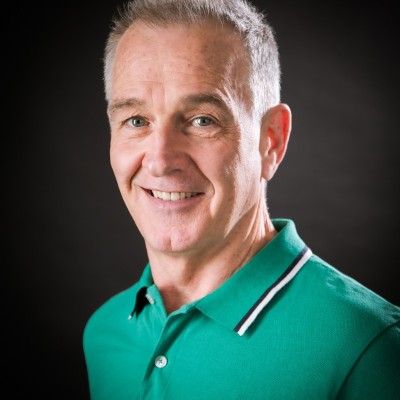
Peter McAteer is the Founder & CEO of Sysmax. During more than three decades in high-hazard industries, he has led international operations, advised institutional investors following major industrial incidents, and helped companies strengthen operational assurance, workforce capability and process safety. Sysmax systems have supported successful regulatory and customer audits across multiple countries.
The recurring weakness
Every company invests heavily in policies, procedures, risk assessments, training records and audits. Yet incidents, errors, rework and avoidable loss continue at extraordinary scale.
The recurring weakness is rarely the absence of another document or another system. It is the gap between what a company intends and what people actually do at work - often described as work as imagined versus work as done.
A lesson that stayed with me
Early in my offshore career, I was in a radio room listening on the emergency channel as a major disaster unfolded. Some things stay with you for life. That experience, and the regulatory changes that followed, taught me that writing procedures is only the beginning. What matters is whether people apply them correctly when it counts.
Years later, while advising institutional investors following another major industrial disaster, I found myself asking the same question: how can companies with deep expertise, mature management systems, extensive training and rigorous oversight still experience catastrophic failure?
That question has shaped Sysmax.
The pattern is remarkably consistent
Across high-hazard and high-performance industries, investigations repeatedly point back to human performance: gaps in capability, failure to follow procedures, weak supervision, poor communication and critical controls not being applied as intended.
Where the contribution is quantified, the figure repeatedly lands at around 80%. Around 80% of well-control incidents are attributed to human factors. Around 80% of pharmaceutical process deviations are traced to human error and failure to follow procedures. Aviation continues to identify human factors as a leading contributor to incidents, while manufacturing, healthcare and utilities absorb enormous losses when work is not executed correctly.
This does not mean that people are the problem. People are the operation. The problem is that measurement often stops when training is complete, a procedure is published or an audit is passed. That proves the system exists. It does not prove the system is working.
Why Sysmax exists
Sysmax exists to close the gap between policy and practice - between the work that should happen and the work that actually happens; between the intention to manage risk and the evidence that risk is being controlled; and between training records and demonstrated capability.
We do not accept that another green dashboard is enough. Training completion is not proof of capability. A risk assessment does not control risk. An approved procedure does not prove correct execution. Audits provide valuable assurance, but they are snapshots. Operations happen continuously.
Companies need evidence that critical protocols are being followed, risks are being controlled and the people carrying out the work can perform it correctly - on every site, across every shift, at the point of action.
Three pillars of operational assurance
The hierarchy is deliberate: first verify that required protocols are being followed; this controls risk; repeated correct execution then demonstrates competency.
Operational compliance
Are critical protocols being followed correctly now?
Policies, procedures and controls create value only when they are used. Sysmax provides workplace-verified evidence of who did what, where, when and against which approved standard. Correct execution is the first requirement: when people follow the right protocols, the operation can demonstrate that intended controls are active.
Controlled risk
Can you demonstrate that critical risks are being controlled now?
Risk is not controlled by writing it down. It is controlled when the protocols, barriers and actions intended to manage it are applied consistently. Sysmax makes critical controls role-based, visible and active in daily work, with risk-impact alerts directed to the people able to act before loss occurs.
Demonstrated competency
Can you prove the people carrying out the work can perform it correctly now?
Competency is not established by course attendance or a current certificate alone. It is demonstrated when people repeatedly apply the required knowledge, skills, judgement and experience in practice. Sysmax connects learning, role requirements and workplace evidence so gaps can be identified before they become operational failures.
The scale of the gap
The figures differ by sector, but the pattern does not: human performance and execution remain central to operational loss despite decades of investment in systems, training and assurance.
| Sector | Headline figure | What it represents | Published source |
|---|---|---|---|
| Energy and oil & gas | ~80% | Well-control incidents attributed to human factors, including procedure execution, competency and supervision. | IOGP Well Control Programme; IOGP Report 810 |
| Chemical and pharmaceutical | ~80% | GMP process deviations attributed to human error and failure to follow procedures. | MasterControl Human Error Solutions; FDA State of Pharmaceutical Quality FY2024 |
| Manufacturing | $1.4 trillion | Annual downtime cost to the world's 500 largest companies - about 11% of revenue. | Siemens True Cost of Downtime 2024 |
| Workplace injuries - USA | $181 billion | Annual cost of work injuries across US sectors. | National Safety Council, Work Injury Costs 2024 |
| Workplace injuries - UK | £22.9 billion | Annual cost of workplace injury and work-related ill health. | HSE Annual Statistics 2023/24 |
| Healthcare - USA | ~$15 billion | Estimated annual cost of about 308,000 recorded workplace injuries. | OSHA/BLS 2024; NSC Work Injury Costs 2024 |
| Aviation MRO | 30,000 shortfall | Projected deficit of qualified aircraft mechanics by 2028, increasing pressure on operational quality and safety. | IATA and Oliver Wyman supply-chain and MRO forecasts |
What the evidence means
These are different industries, governed by different standards, technologies and regulators. Yet the same operational question persists: can the company prove that critical protocols are being followed, risk is being controlled and the people doing the work are capable?
That is the business case for operational assurance. It protects people, but it also safeguards production, quality, margin, reputation, stakeholder confidence and permission to operate.
From intention to evidence
For more than three decades, Sysmax has worked in industries where performance standards are non-negotiable. Our technology has evolved, but our purpose has remained constant: to help companies turn boardroom expectations into verified frontline performance.
Benchmax, Casmax and Sawmax connect operational compliance, risk control, competence assurance, testing and improvement. Together, they provide an evidence layer across the workplace - any site, any shift, any device, online or offline.
We are not trying to replace the systems companies already depend on. We make them more valuable by verifying that what they record, require and prescribe is applied in practice.
When something goes wrong, the decisive question is rarely, “Did the policy exist?” It is, “Can you prove the work was done correctly?”
“If people follow the protocols, they will necessarily manage risk and demonstrate competency.”Peter McAteer
That is why Sysmax exists.
Move from compliance on paper to performance in practice.
See how Sysmax helps your company achieve operational compliance, control risk and demonstrate competency.
Book a Demo